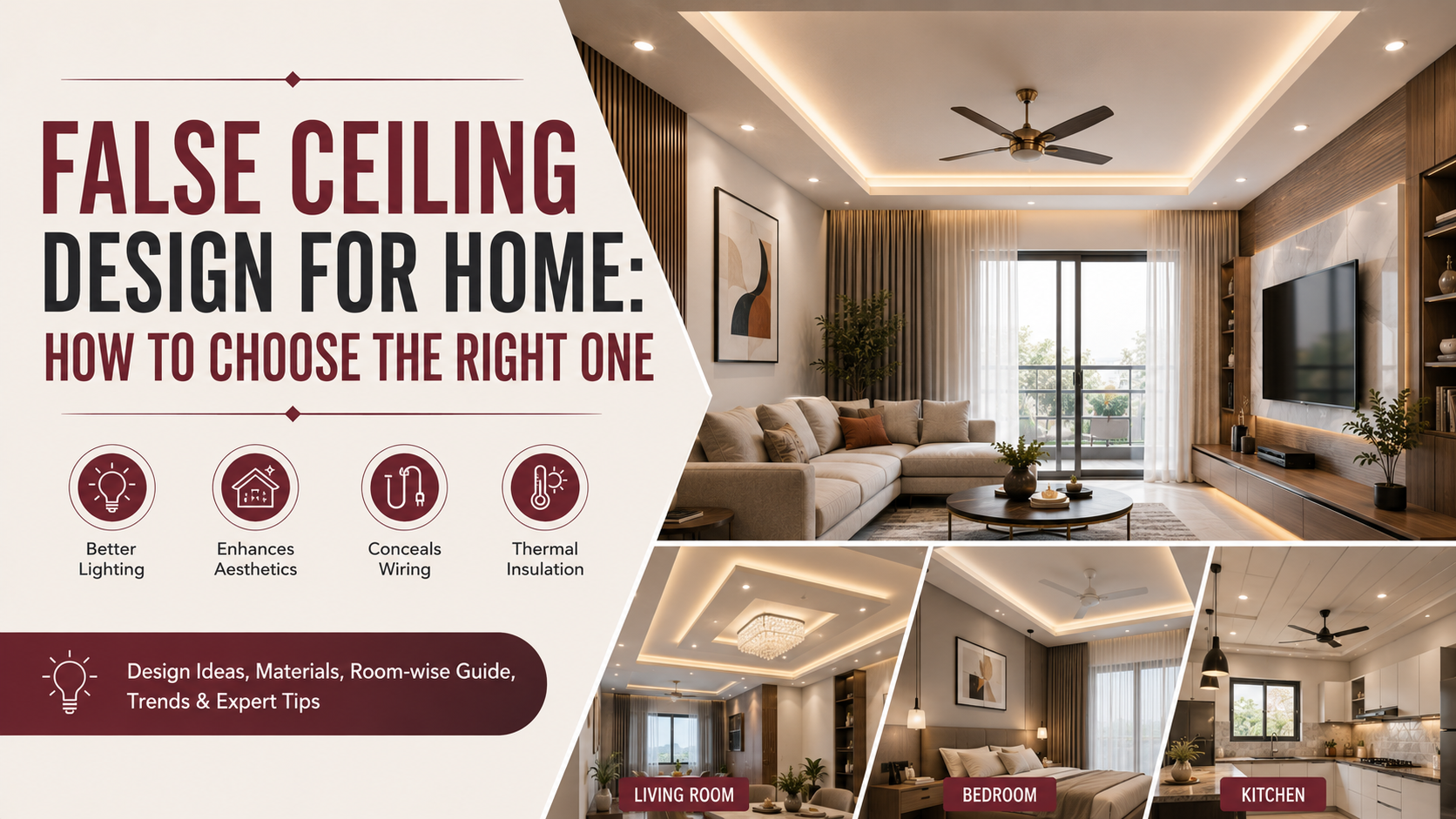
Enhance your interiors with the right false ceiling design for home that blends style, lighting, and functionality effortlessly.
False Ceiling Design for Home: How to Choose the Right One
Introduction
Your ceiling is the fifth wall of your home and most people completely ignore it. A well-planned false ceiling design for home interiors can transform an ordinary room into a polished, layered space that feels both functional and luxurious. Whether you are renovating a compact apartment or designing a new villa, the right ceiling makes a significant difference.
In this guide, we cover materials, room-wise recommendations, trending ideas, and common mistakes to avoid.
What is a False Ceiling?
A false ceiling, also called a dropped or suspended ceiling, is a secondary ceiling installed below the original structural ceiling. The gap between the two surfaces houses electrical wiring, lighting fixtures, insulation, and air conditioning ducts.
Common materials used:
- Gypsum boards
- Plaster of Paris (POP)
- Wood panels
- Metal tiles
- PVC sheets
Benefits of False Ceiling Design for Home
Before choosing a style, here is why false ceilings have become a staple in modern interior design:
- Improves lighting: Embed LED strips, spotlights, and cove lighting for ambient, task, or accent illumination
- Enhances aesthetics: Adds visual interest, defines zones, and gives a finished look to any space
- Conceals wiring: Hides electrical cables, HVAC ducts, and plumbing lines behind the ceiling
- Thermal insulation: The air gap acts as an insulator, helping regulate room temperature and reduce energy costs
Types of False Ceilings You Can Choose From
Gypsum False Ceiling
The most widely used material for gypsum false ceiling design in Indian homes.
- Lightweight and easy to install
- Smooth, paintable finish
- Suitable for flat and curved designs
POP (Plaster of Paris) Ceiling
Best for traditional and transitional interiors with decorative detailing.
- Highly customizable with ornate patterns
- Ideal for cornices and intricate motifs
- More labor-intensive but highly crafted
Wooden False Ceiling
A warm, premium choice for living rooms, bedrooms, and home offices.
- Suits Japandi, Scandinavian, and rustic themes
- Adds texture and natural character
- Available as solid panels or veneer finishes
Metal Ceiling
Durable and practical, especially for humid spaces.
- Moisture-resistant and low-maintenance
- Great for kitchens, bathrooms, and industrial-style interiors
- Available in tiles and perforated panel formats
How to Choose the Right False Ceiling
Based on Room Type
- Living room: Statement designs with cove lighting, multi-level drops, or geometric patterns
- Bedroom: Soft, calm ceilings with warm recessed lighting
- Kitchen: Moisture-resistant metal or PVC with minimal ornamentation
Based on Ceiling Height
- Below 9 feet: Keep it minimal with a single flat level in light colors
- 10 feet and above: Experiment with layered drops, tray ceilings, or dramatic cove lighting
Based on Lighting Needs
- Cove lighting: Soft, diffused glow for bedrooms and dining areas
- LED strip lights: Add depth along dropped perimeters
- Spotlights: Best for task-focused areas like kitchens and study rooms
Based on Budget
- Budget-friendly: Gypsum and POP are affordable and widely available
- Premium: Wood and metal have higher material and installation costs
- Design complexity like layering and curves adds to the overall price
Best False Ceiling Designs for Different Rooms
Living Room Ceiling Design
The ceiling design for living room spaces should make a statement. Popular choices include:
- Tray ceiling with LED cove lighting
- Double-drop design with a chandelier focal point
- Geometric gypsum patterns with contrasting paint between levels
Bedroom Ceiling Design
Bedrooms need calm and comfort. Consider:
- Single-drop false ceiling with warm white LED strips along the perimeter
- A spotlight cluster above the bed as a focal point
- Soft tones that complement the wall and furniture palette
Kitchen Ceiling Design
Prioritize practicality:
- Flat PVC or metal false ceiling with embedded downlights
- Easy to clean and resistant to grease and moisture
- Minimal ornamentation to maintain hygiene
Latest Trends in False Ceiling Design
- Minimalist ceilings: Clean, flat surfaces with a single recessed light channel
- Geometric patterns: Hexagons, grids, and linear wooden slat ceilings for living rooms and offices
- LED-integrated designs: Backlit panels and color-changing LED strips as part of modern false ceiling ideas
- Biophilic elements: Natural wood slats and earthy tones combined with greenery-inspired accents
Common Mistakes to Avoid
- Overdesigning: Too many levels and lighting zones make a ceiling feel cluttered; pick one focal element
- Poor lighting placement: Lights too close create glare; too far apart leave dark patches; always plan on a grid
- Ignoring ceiling height: A heavy false ceiling in a low room kills the sense of space; account for a drop of 6 to 12 inches before finalizing
Maintenance Tips for False Ceilings
Keep your false ceiling looking fresh with these simple habits:
- Use a dry microfiber cloth or soft brush vacuum attachment to remove dust from gypsum or POP surfaces
- Avoid wet cleaning unless the surface is sealed with washable paint
- Fill minor cracks with joint compound and touch up the paint
- Address any water leakage from above immediately to prevent board damage
Conclusion
A thoughtfully planned false ceiling design for home interiors does far more than add visual appeal. It organizes your lighting, hides structural clutter, improves thermal comfort, and ties your entire interior together. The key is to match the material, design complexity, and lighting to your room type, ceiling height, and lifestyle.
Ready to transform your ceiling into a design feature? Get in touch with the DecoGully team today and book your free consultation.
FAQs
What is the best material for a false ceiling?
Gypsum is the top choice for most homes due to its lightweight nature and smooth finish. POP suits decorative work, while metal and PVC are better for moisture-prone areas.
Which false ceiling is best for a living room?
A gypsum false ceiling with cove lighting or a tray design works best. It supports layered lighting and delivers a premium finish that elevates the entire space.
Is a false ceiling good for small homes?
Yes. A flat single-level false ceiling in a light color with recessed lighting creates the illusion of height and openness in compact rooms.
How long does a false ceiling last?
A well-installed gypsum or POP ceiling lasts 10 to 15 years with minimal upkeep. Lifespan depends on moisture levels and installation quality.
Can false ceilings be installed in rented apartments?
Most installations require landlord permission since they involve drilling into the structural ceiling. Modular clip-in tile systems are a renter-friendly alternative.
Does a false ceiling reduce noise?
Yes. The air gap and insulation materials provide moderate acoustic dampening. Acoustic gypsum boards can be added for better soundproofing.


CommentsBe the first